
What is Canxiol?
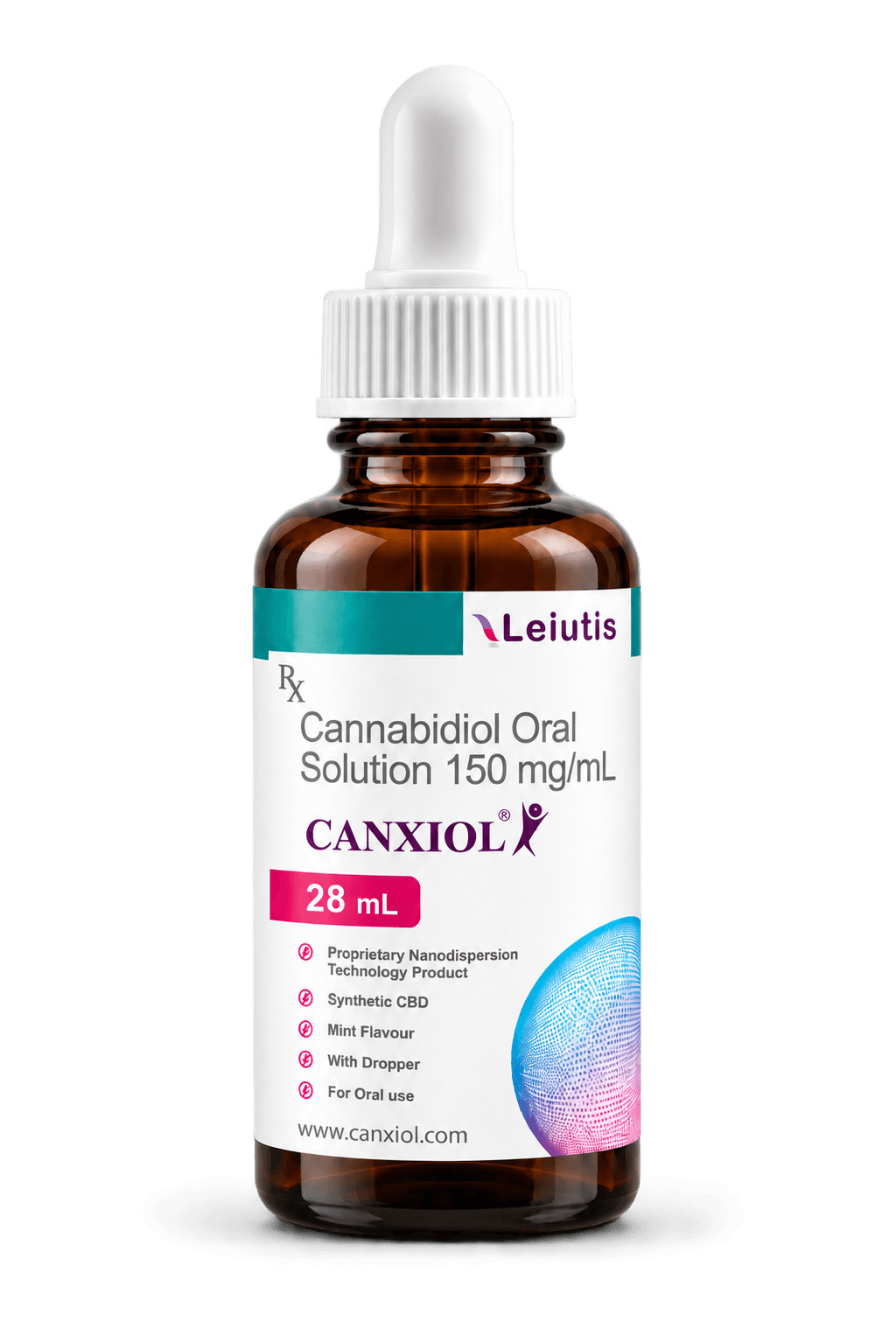
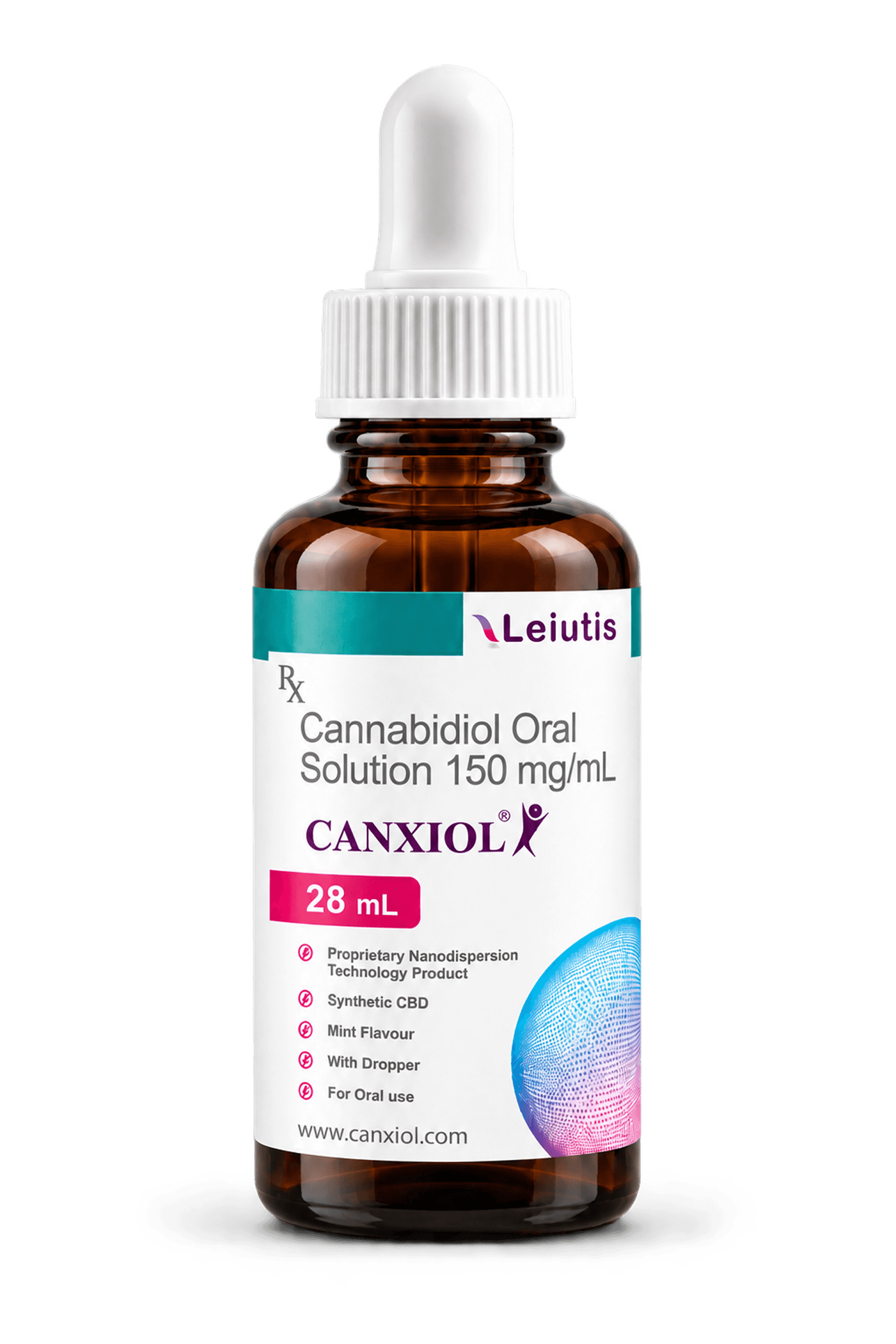
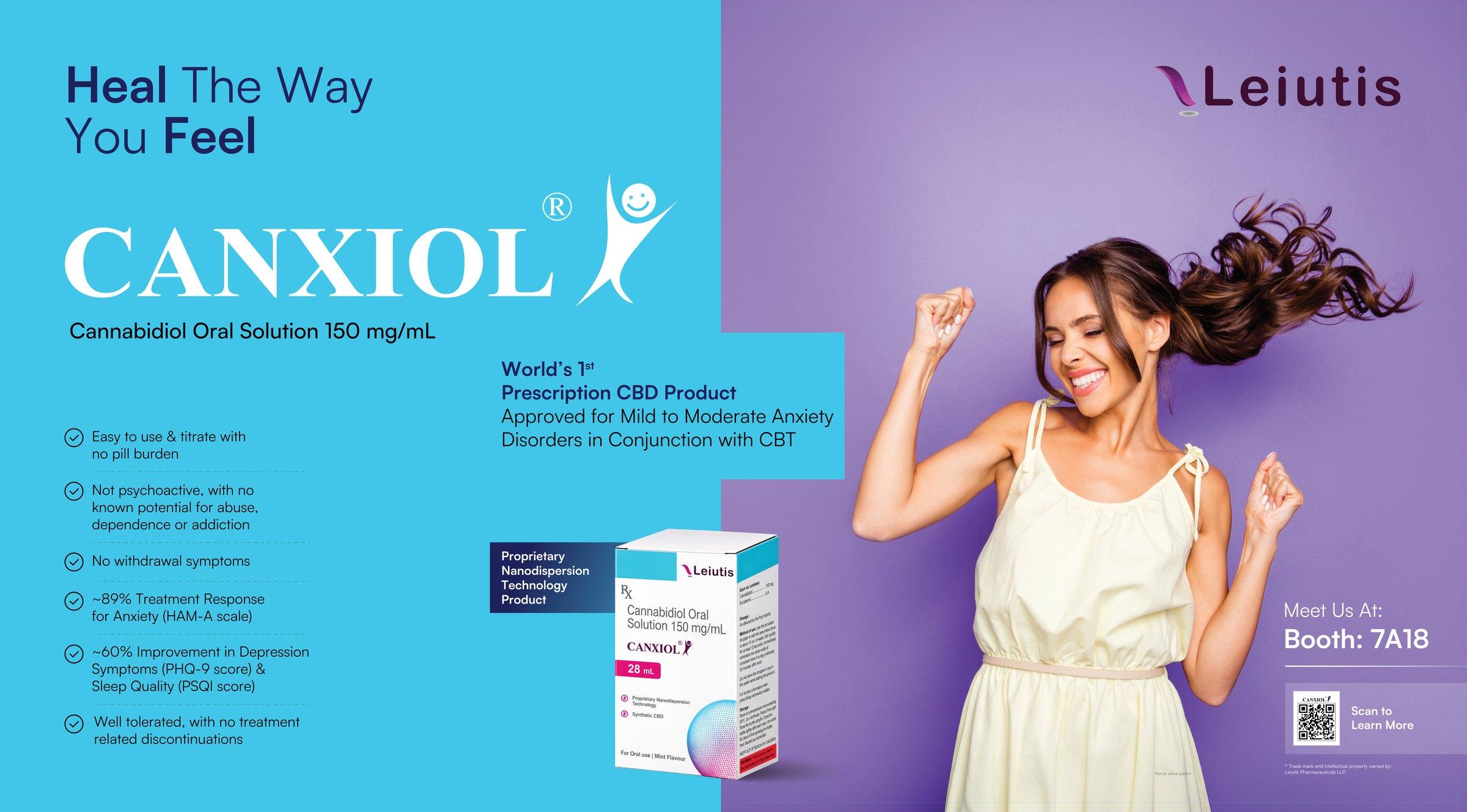
Canxiol is a Cannabidiol oral solution containing Cannabidiol 150mg/ml for the management of mild to moderate anxiety in conjunction with cognitive behavior therapy. To be prescribed by Psychiatrists only.
No withdrawal symptoms. Non-psychoactive, with no known potential for dependence or addiction.
Rapid aqueous distribution upon mixing with water. Easy to use and titrate with no pill burden.
89% treatment response for Anxiety (HAM-A scale). 60% Improvement in Depression Symptoms (PHQ-9 score) and Sleep quality (PSQI score)
Pack Presentation.
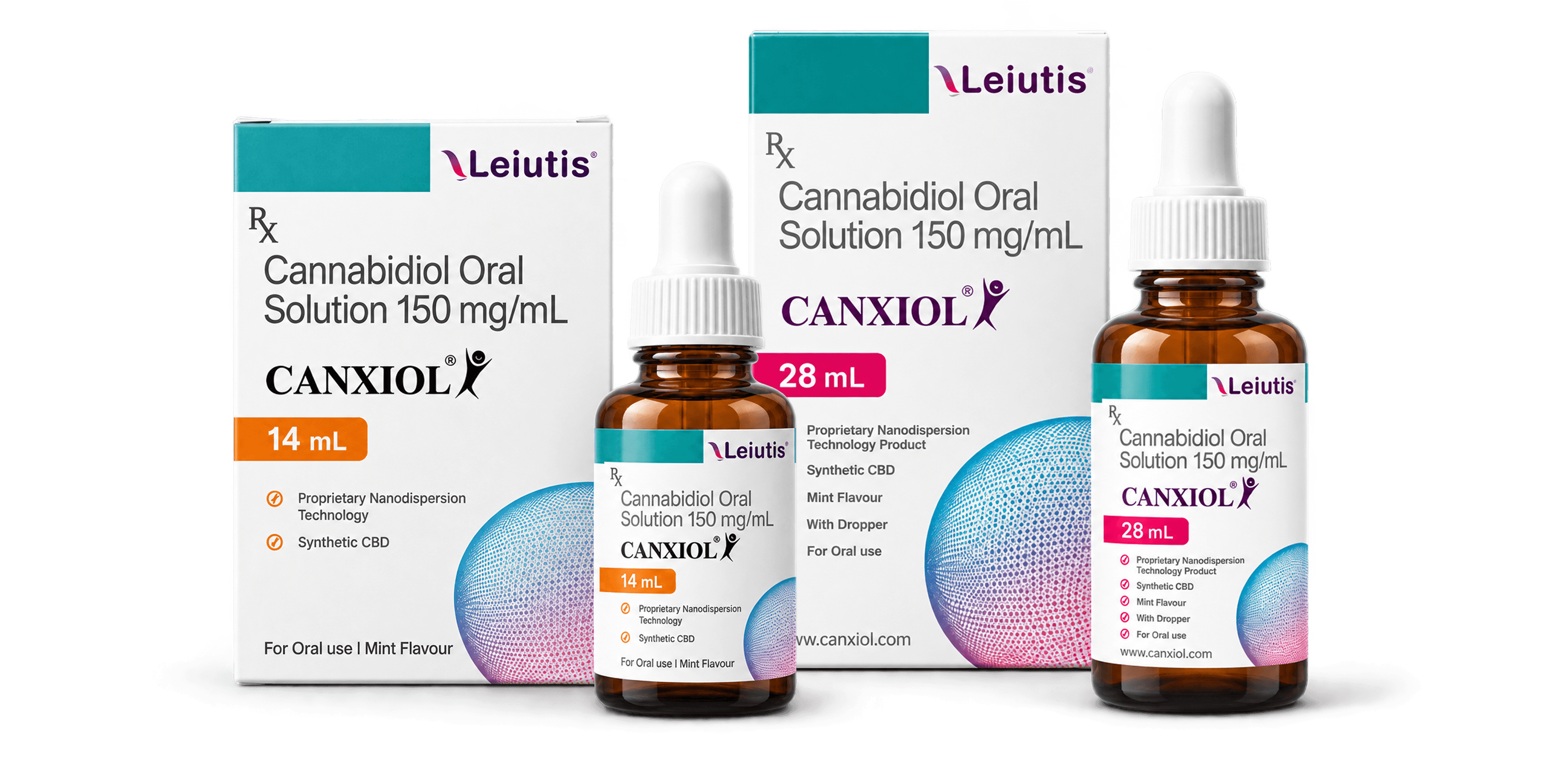
Canxiol is available in two pack configurations:
Supplied with a tamper-resistant CRC cap and a calibrated 1 mL CRC dropper.
✓ Precise volume gradations (0.25, 0.50, 0.75, 1.0 mL)
Storage Conditions.
Use within 60 days of first opening the bottle, then discard any remainder.
Store at a temperature not exceeding 30ºC. Do not freeze. Protect from light. Store the bottle upright. Keep out of reach of children. Keep the cap tightly closed.
How Canxiol stands out?
 Trademark and IP owner
 Synthetic cannabidiol API manufacturingUSDMF #35992
 GMP certified Formulation manufacturing
- 01
Canxiol contains fully synthetic Cannabidiol, not plant-derived and hence non-psychoactive, with no known potential for abuse, dependance. No withdrawal symptoms
- 02
Canxiol is formulated with pharmaceutical grade synthetic cannabidiol using proprietary nanodispersion technology
- 03
API Manufactured by Biophore in accordance to GMP requirements and has a USDMF No- 35992
- 04
Canxiol is manufactured by Zenara in their facilities with GMP certification from regulatory authorities including the USFDA, EU, MHRA, Turkey, Russia & WHO - GMP certified
How to Administer Canxiol.
Canxiol® should be administered at the dose prescribed by your psychiatrist.
Administer the dose at consistent time with respect to meals preferably 30 minutes after food.
It is recommended to use a calibrated measuring dropper provided along with the pack to measure and deliver the prescribed dose accurately. A household teaspoon or tablespoon is not an adequate measuring device.
Measure the prescribed dose of Canxiol® into the calibrated dropper and add the measured dose to about 150 mL of water. Stir rapidly for at least 10 seconds using a spoon or stirrer and immediately administer the dose orally.

Prescribed dose
Verify the exact dose as directed by Psychiatrist to be administered 30 mins post meal.
Measure with calibrated dropper
Use only the enclosed calibrated measuring dropper supplied with the pack to draw the accurate volume.
Add & stir rapidly
Add to approx 150ml water and stir rapidly with a spoon or stirrer for at least 10 seconds.
Administer orally
After stirring, immediately consume the entire contents orally.
⚠ IMPORTANT
Do not allow the dropper to touch the water while adding the product. In instance, if the tip of the dropper touches the water, squeeze the dropper & wipe the dropper with a clean absorbent tissue paper, clean cloth and place the dropper back into the bottle.
After use, close the bottle tightly with dropper provided. Store at a temperature not exceeding 30ºC.
Discard any unused Canxiol® remaining 60 days after first opening the bottle.
Clinical Trial Data.
Phase III, prospective, double-blind, placebo-controlled, parallel-group, multicentre randomised controlled trial.
Clinical Trial Data.
CANXIOL® EVIDENCE SUMMARYA prospective, randomized, double-blind, multicenter comparative study to Evaluate the Efficacy, Safety and Pharmacokinetics of Cannabidiol oral solution versus matching Placebo for treatment of mild to moderate anxiety disorders
Significant response, all clinical endpoints
Anxiety, clinician global impression, depressive symptoms, and sleep quality each improved by roughly half to two-thirds from baseline with cannabidiol.
Well-tolerated
41 of 178 participants reported at least one adverse event; none were serious, and none led to treatment discontinuation.
Endpoints
- Primary:
- GAD-7, HAM-A
- Secondary:
- CGI-I, CGI-S, PHQ-9, PSQI
- Assessed:
- Baseline and Visit 9 (end of treatment)
150 mg BID in week 1, titrated to 225 mg BID in week 2 and 300 mg BID in week 3, continued for 8 weeks (Visit 9), then tapered to 150 mg QD for 1 week. The dose is added to about 150 mL of water, mixed, and consumed 30 minutes after food.
Both co-primary endpoints met
GAD-7 − 7.02 pts • HAM-A − 11.9 pts vs. placebo, both p < 0.0001
Gundugurti PR, Banda N, Yadlapalli SS, Narala A, Thatikonda R, Kocherlakota C, Kothapalli KSD. Asian J Psychiatry 2024;97:104073; https://doi.org/10.1016/j.ajp.2024.104073.
Adverse Reactions reported in phase 3 clinical trial.
In Phase III randomized clinical trial, the most common adverse reactions that occurred in Canxiol® treated patients with mild to moderate anxiety disorders were fatigue, abdominal pain, abdominal distension, dizziness, diarrhoea, nausea.
Below table lists the adverse reactions that were reported in the randomized controlled trial.
Adverse Reactions in patients treated with Canxiol® in clinical trial
| ADVERSE REACTIONS | CANXIOL® (N=89) N (%) | PLACEBO (N=89) N (%) |
|---|---|---|
| Patients with at least one AE | 28 (15.7) | 13 (7.3) |
| Gastrointestinal disorders | 17 (19.1) | 6 (6.7) |
| • Abdominal distension | 2 (2.2) | 0 |
| • Abdominal pain | 2 (2.2) | 0 |
| • Abdominal pain upper | 3 (3.4) | 0 |
| • Constipation | 1 (1.1) | 1 (1.1) |
| • Diarrhoea | 3 (3.4) | 0 |
| • Eructation | 0 | 1 (1.1) |
| • Frequent bowel movements | 2 (2.2) | 0 |
| • Nausea | 5 (5.6) | 3 (3.4) |
| • Vomiting | 0 | 1 (1.1) |
| General disorders and administration site conditions | 4 (4.5) | 3 (3.4) |
| • Fatigue | 1 (1.1) | 0 |
| • Pain | 2 (2.2) | 0 |
| • Pyrexia | 1 (1.1) | 3 (3.4) |
| Infections and infestations | 1 (1.1) | 0 |
| • Nasopharyngitis | 1 (1.1) | 0 |
| Nervous system disorders | 7 (7.9) | 5 (5.6) |
| • Dizziness | 2 (2.2) | 2 (2.2) |
| • Dysgeusia | 1 (1.1) | 0 |
| • Headache | 4 (4.5) | 4 (4.5) |
| Psychiatric disorder | 1 (1.1) | 0 |
| • Libido increased | 1 (1.1) | 0 |
| Respiratory, thoracic and mediastinal disorders | 0 | 1 (1.1) |
| • Cough | 0 | 1 (1.1) |
n: Number of patients, %: Percentage of patients
Drug-drug Interactions.
Comprehensive metabolic and pharmacokinetic interaction guidance for prescribers.
Co-administration with a strong CYP3A4 (Carbamazepine, Efavirenz, Mitotane, Enzalutamide) and CYP2C19 inducer (rifampin) reported to decrease cannabidiol plasma concentrations. Consider an increase in Cannabidiol dosage (based on clinical response and tolerability), when co-administered with a strong CYP3A4 and/or CYP2C19 inducer.
Pharmacokinetics.
Absorption
The single dose pharmacokinetics of Cannabidiol following oral administration of Canxiol® to healthy volunteers under fasting and fed conditions is provided in the table below.
Single Dose Pharmacokinetics of CANXIOL® (under fasting and fed conditions)
| PARAMETER | CANXIOL®, 300 MG (FASTING) | CANXIOL®, 300 MG (FED) |
|---|---|---|
| Cmax (ng/mL) | 229.338 | 306.108 |
| Tmax (h) | 0.994 | 2.738 |
| AUCinf (ng*hr/mL) | 535.840 | 1626.432 |
| T1/2 (h) | 3.571 | 6.938 |
Meal Effect: Coadministration of Canxiol® with a high-fat/high-calorie meal increased Cmax by about 1.3 folds, AUC by about 3 folds compared with the fasted state in healthy volunteers.

Volume Profile
The volume of distribution of Canxiol® in healthy volunteers in fed and fasting conditions is about 1846 L and 2884 L respectively.

Hepatic Pathways
Cannabidiol is metabolized in the liver and the intestine by CYP2C19 and CYP3A4 enzymes, and 5′-diphosphoglucuronosyltransferase (UGT) UGT1A7, UGT1A9, and UGT2B7 isoforms. Converted to major metabolites 7-Hydroxy Cannabidiol and 7-carboxy Cannabidiol.

Clearance & Half-life
The single-dose half-life of Canxiol® in fasted condition is about 3.5h and in fed condition is about 7h.

Renal Clearance
Cannabidiol and its metabolites are mostly excreted via the kidneys.
Prescribing Information Leaflet (PIL)
Download the document
PSYCHIATRISTS ONLY
Heal the way you Feel
Anxiety is treatable – Seek Psychiatrist guidance.
Prescribing Information Leaflet
Download Official Document